Nanoencapsulation in Supplements What the Science Actually Shows
Nanoencapsulation helps some ingredients, but the human evidence is narrow.

A daily nootropic shot with nanoencapsulation may improve absorption, but being liquid does not make it better than capsules or powder. Nanoencapsulation can address real delivery problems, with the strongest human evidence here coming from curcumin and liposomal vitamin C. For brain and stress supplements labeled “nano,” human absorption data for the specific formulation provide the useful evidence.
Why most supplement ingredients fail before they can work
An ingredient can look promising in a lab and still do little when swallowed. The gut is a filter. Many lipophilic bioactive compounds dissolve better in fat than in the watery environment of the gut. Stomach acid or intestinal enzymes can break down others, and the liver can metabolize absorbed compounds before they reach systemic circulation. The dose on the label is not the dose available to act.
Curcumin makes that delivery gap concrete. Standard curcumin has less than 1% oral bioavailability, leaving the overwhelming majority of a conventional dose unavailable to the bloodstream. Ashwagandha’s polar withanolide glycosides face a different obstacle, including limits on their passage across the intestinal wall. These barriers help explain why an ingredient can have less effect after oral administration than it does in a controlled lab setting. They show why ingredient potency alone is an incomplete measure.
What nanoencapsulation actually does inside the body
Nanoencapsulation places an active compound inside a nanoscale carrier that can protect it and change how it moves through the gut. Protection is only part of the job. The carrier can help disperse a fat-soluble ingredient in water, making it more accessible for absorption. Some particles also adhere to intestinal mucus, a process called mucoadhesion, which extends contact with the gut surface. Others can enter cells through endocytosis, in which the cell takes the particle into itself.
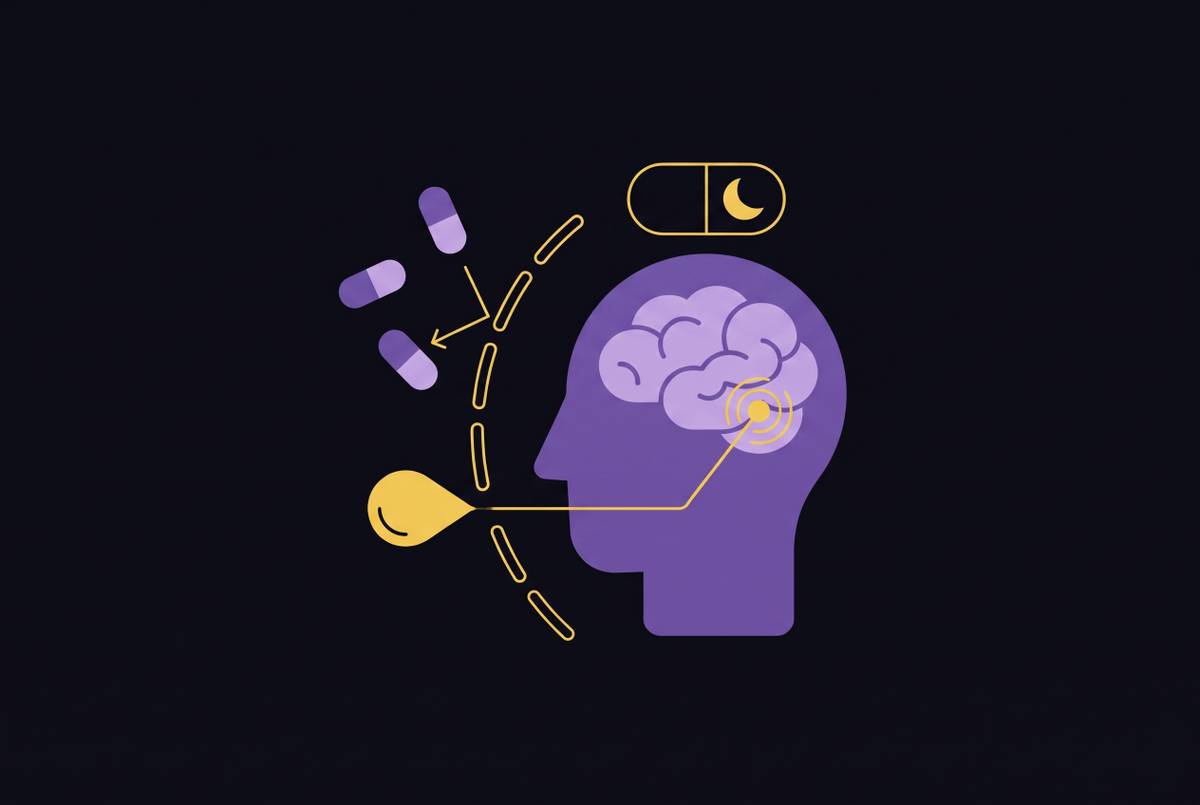
Lipid-based carriers offer another route through lymphatic transport. This route can take an absorbed compound past the liver and bypass hepatic first-pass metabolism. That detour is especially relevant to fat-soluble compounds such as curcumin, CoQ10, and omega-3 oils that would otherwise lose part of their dose to early metabolism. The route depends on the formulation, however. A “nano” label does not establish that a product uses it successfully.
Carriers can also control where or how quickly an ingredient is released. The main families include liposomes, which are lipid bilayer vesicles, solid lipid nanoparticles, nanoemulsions, polymeric nanoparticles, and protein-based nanovehicles. Each offers different strengths for different compounds. A carrier that improves dispersion is not automatically the best choice for protection or controlled release.
What the human evidence actually shows for nanoencapsulated ingredients
Of the evidence supplied, the clinical findings for curcumin are the strongest. A 2025 meta-analysis of 15 randomized controlled trials with 1,123 patients found that nanocurcumin had strong effects on depression outcomes, while the effects of standard curcumin did not reach significance. That goes beyond measuring an ingredient in blood. It suggests that delivery form can influence a clinical outcome, although it does not establish that every nanocurcumin formulation outperforms every conventional extract. It also does not prove that a nootropic blend has the same benefit.
A zein nanoparticle study found a ninefold increase in oral bioavailability compared with standard curcumin extract, but that result should not be presented as human proof without the study population being established. Yu et al. found high encapsulation efficiency and greater in vitro bioaccessibility for curcumin-loaded solid lipid nanoparticles. Bioaccessibility measures what becomes available for absorption during digestion. It is not proof of what reaches a person’s bloodstream or improves their health.
Human comparative studies of oral liposomal vitamin C show greater bioavailability than non-liposomal vitamin C, supporting an absorption claim. Nanoencapsulated omega-3 oils also show an oxidative stability advantage over unencapsulated oils, which is useful because oxidation can reduce efficacy and raise safety concerns. Treating these distinct findings about clinical outcomes, absorption, and preservation as interchangeable would make the evidence sound broader than it is.
Where nanoencapsulation science is most relevant to cognitive and stress ingredients
For Ashwagandha, evidence that the ingredient works is separate from evidence that its delivery system works. Alsanie et al.’s 2026 dose-response meta-analysis found that stress, anxiety, and depression fell significantly more with the ingredient than with placebo. Its polar withanolide glycosides nevertheless face solubility and permeability limits that may contribute to variable results. Better delivery is a plausible way to address those limits. Human trials still need to show which carrier and dose improve outcomes beyond changing how much of the ingredient the body is exposed to.
Lion’s Mane works through a different proposed pathway, nerve growth factor stimulation. Mori et al. found statistically significant cognitive improvements in participants with mild cognitive impairment over 16 weeks, with effects waning after supplementation stopped. Results across small pilot trials remain mixed. The lipophilic NGF-stimulating compounds in Lion’s Mane, hericenones and erinacines, provide a research rationale for using lipid-based carriers in a nanoencapsulated shot.
Bacopa monnieri acts through BDNF upregulation and cholinergic enhancement, with memory consolidation effects typically requiring 4–6 weeks of use. It is not an instant-focus ingredient. A 2025 Australian randomized controlled trial found significantly more adverse events in the Bacopa group, mainly digestive complaints and headaches. Controlled-release nanoencapsulation could, in principle, reduce digestive exposure by delaying release. It has yet to be shown that this would prevent those adverse events.
Rhodiola rosea differs because effects have shown up in acute, single-dose protocols as well as after weeks of use. Its described mechanisms include mild MAO-A/B inhibition and modulation of serotonin, norepinephrine, and dopamine under stress. Those mechanisms do not establish a nanoencapsulation advantage. Evidence for an ingredient’s timing and action must remain separate from evidence that a new carrier improves it.
L-theanine offers another way to feel relaxed and alert by increasing alpha brain-wave activity. A 2025 meta-analysis found improvements in sleep quality and daytime dysfunction scores. Matcha combines L-theanine and caffeine in a natural matrix that moderates caffeine’s stimulant curve. That is a formulation feature before nanoencapsulation enters the picture. A delivery claim for any of these ingredients needs to name the problem it would solve, since useful ingredients may need different kinds of help.
The three strongest objections the literature raises against nanoencapsulation claims
Much of the evidence comes from laboratory or animal work. Animal absorption models do not reliably reproduce human gastrointestinal physiology, and in vitro assays can overstate real-world absorption. A nanoform beating placebo does not prove that it beats the same ingredient in a well-formulated conventional supplement at an equivalent dose. Without that comparison, superior delivery remains uncertain.
The second objection concerns the carrier’s safety. There are few long-term data on what happens when people ingest synthetic polymer-based nanocarriers every day, and a study of the ingredient inside cannot answer questions about the material around it. Food-grade lipid-based carriers have a more established safety profile, but that does not validate every finished formulation. Safety, toxicology, and regulatory oversight remain unresolved challenges across nano-enabled supplements. Production costs and inconsistent gastrointestinal performance add practical limits, while regulatory frameworks in most markets lag behind commercial claims.
The third objection is that “nanoencapsulated” covers products with very different properties. A curcumin nanoemulsion is not the same technology as a solid lipid nanoparticle or a liposome. Their stability, release rates, and encapsulation efficiencies can differ substantially. Encapsulation efficiency is the share of the active compound that is enclosed in the carrier, so a batch with little of the compound enclosed may be little better than a conventional pill. The label gives a buyer too little to judge unless there is independent evidence of particle size, how much is enclosed, and how it is released in the body.
What separates a credible nanoencapsulation approach from a marketing claim
Encapsulation efficiency should be established analytically, using chromatographic quantification to determine how much active compound is enclosed. Particle size needs measurement too. Dynamic light scattering can assess size, while zeta potential analysis helps assess colloidal stability, or whether the particles remain dispersed. Unstable particles can lose their delivery advantage before ingestion, regardless of how promising the original design looked.
Those measurements establish formulation properties. Human pharmacokinetic studies are the next test because they measure how much of an ingredient reaches circulation and how exposure changes over time. The most useful design compares the nanoform with the free form at equivalent doses. Transparent dosing is essential to interpreting that comparison. If a product does not disclose how much of a named compound is enclosed, a buyer cannot connect its delivery claim to the evidence.
Tests for heavy metals, PFAS, mycotoxins, and plastic chemicals address contamination, but they do not establish particle size or absorption. These are different jobs for different tests. Process certifications are useful when they verify the formulation process. A claim that can be trusted says what was tested and keeps one certificate from being used as proof of everything else.
For a buyer, the practical question is whether a daily nootropic shot actually absorbs better than capsules or powder. A 2oz liquid formula with a lipid-derived shell, such as one made from olive oil, is a plausible way to do this, but that alone does not prove it works better. The meaningful comparison concerns its named ingredients, such as Lion’s Mane, Ashwagandha, and Cognizin®, and the evidence for their delivery in that formula. High encapsulation efficiency and human absorption data would support the claim. The liquid format and the source of the lipid shell would not establish it on their own.
What the science confirms, what it doesn't, and what it means for a daily supplement decision
Nanoencapsulation has known biological mechanisms and has been shown to improve absorption, but proof for one ingredient or carrier does not by itself apply to another. Curcumin has the strongest clinical evidence discussed here, while liposomal vitamin C has human evidence for improved bioavailability. Cognitive-specific carrier pairings remain less settled. Optimal doses, particle sizes, and delivery systems for Lion’s Mane hericenones and ashwagandha withanolides have not been established in human trials.
Ashwagandha, Bacopa, Lion’s Mane, and L-theanine are worth considering on their clinical evidence, while recognizing the differences in populations, outcomes, and consistency of results. Better absorption cannot rescue weak underlying science. For any nanoencapsulated product, the useful questions concern carrier type, encapsulation efficiency, equivalent-dose human absorption comparisons, and independent testing. Those criteria offer a firmer basis for choosing than “liquid,” “premium,” or “nano” alone.
Daily use also needs to match the evidence. Bacopa’s 4–6 weeks of loading and the 16-week Lion’s Mane trial do not support expectations of an immediate boost from either ingredient. Controlled release aims to keep systemic concentrations steadier over time, but the finished formula still needs to be tested to see if it does that. A daily nootropic shot needs to demonstrate a useful advantage for the ingredients and doses it actually contains.
Sources
- Frontiers
- (PDF) Nanoencapsulation in Functional Foods: Improving Delivery, Stability, and Sustainability of Bioactive Compounds
- (PDF) Nanoencapsulation of nutraceuticals: enhancing stability and bioavailability in functional foods
- Nanoencapsulation of nutraceuticals: enhancing stability and bioavailability in functional foods - PMC
- Introduction
- Nanoencapsulation of Nutraceuticals and Dietary Supplements for Effective Delivery
- Frontiers in Nutrition 01 frontiersin.org Nanoencapsulation of
- (PDF) A Systematic Review of Nano-Encapsulation for Improving the Bioavailability of Dietary Supplements and Nutraceuticals