Lion's Mane Mushroom and Neuroplasticity During Sleep
Lion's Mane may raise BDNF, but sleep decides what it does.
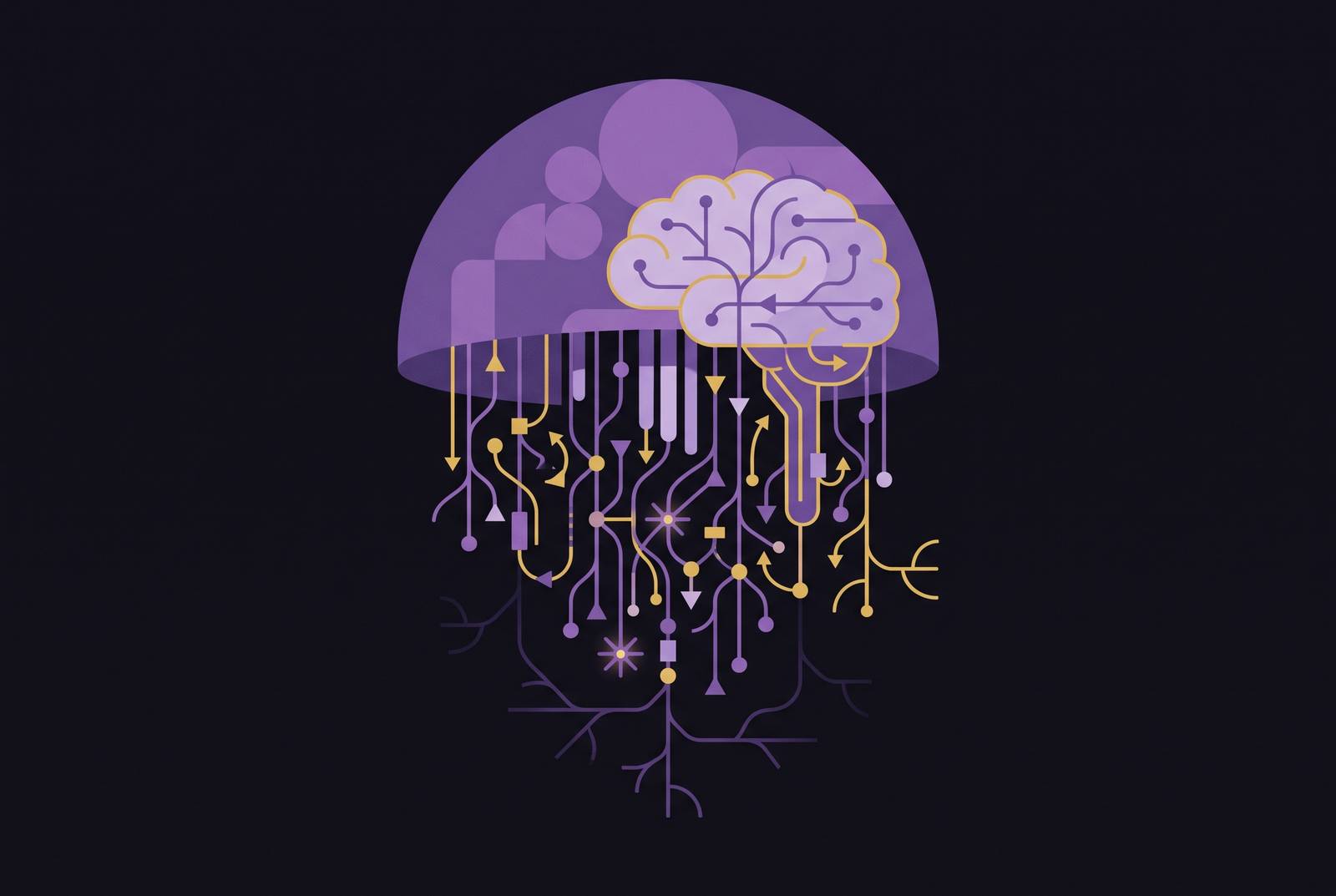
Lion's Mane is usually sold as something you take to grow neurons, as though the act of swallowing the capsule were the whole story. What matters is when the neurotrophins it stimulates actually do their work, and what conditions make that work succeed or fail. Sleep is where that question gets answered. During slow-wave sleep and REM sleep, the brain runs its memory consolidation machinery, and long-term potentiation, the synaptic strengthening process that underlies learning and memory, depends heavily on both stages. REM sleep is linked to LTP directly, while slow-wave sleep carries out a more layered job that mixes LTP-like strengthening with synaptic downscaling. LTP itself is modulated by BDNF, so the amount of BDNF available during sleep sets whether consolidation happens at all. A supplement that raises BDNF is handing the brain a resource, and the value of that resource is set almost entirely by what the brain does with it during sleep, not by what the person taking it does during the day.
What Lion's Mane contains by source
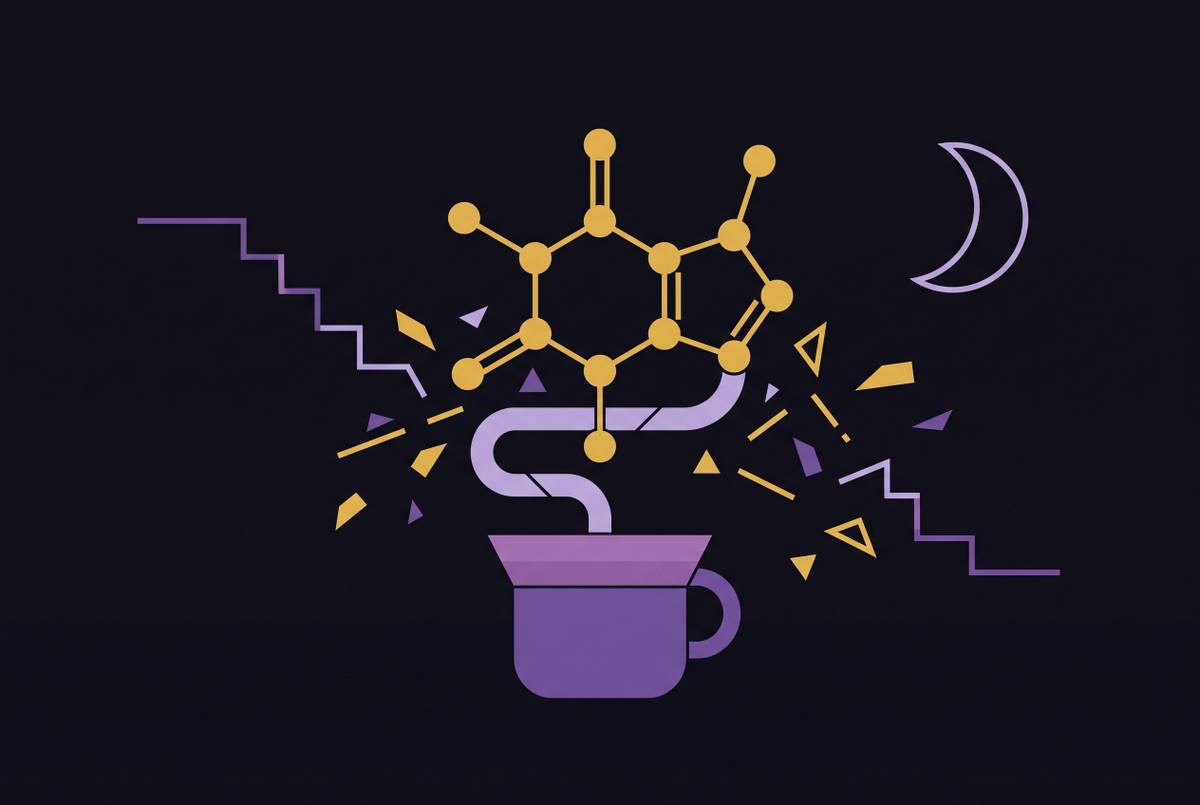
Lion's Mane makes two separate families of neuroactive compounds, and each comes from a different part of the mushroom. That distinction isn't a label detail manufacturers can gloss over. It changes what a given product is pharmacologically capable of doing. Hericenones are aromatic compounds drawn from the fruiting body, the part of the mushroom that grows above the substrate, and they've been shown to stimulate the synthesis of nerve growth factor, or NGF. Erinacines come from the mycelium, the root-like network the mushroom grows from, and they belong to a class of compounds called cyathane diterpenoids. Fifteen erinacines have been identified, labeled A through K and P through S, and erinacine A has been reported to carry the greatest biological activity of the group. A Cognitive Vitality Report from the Alzheimer's Drug Discovery Foundation and a 2025 systematic review published in Frontiers in Pharmacology both confirm that erinacines can cross the blood-brain barrier and stimulate NGF synthesis directly in the central nervous system.
That crossing matters more than it might sound. Plenty of botanical compounds show activity in a petri dish and never reach the brain in a living person. Blood-brain barrier penetration is what separates erinacines from that larger pool of compounds and what makes central NGF stimulation a real, testable possibility rather than a laboratory curiosity.
NGF stimulation is only one piece of what Lion's Mane appears to do. Research points to a profile that touches several systems at once: neuronal survival through the NGF pathway, synaptic strength through BDNF, structural growth through neurite outgrowth documented in preclinical work, reduced neuroinflammation through cytokine reduction, faster signal transmission through myelination support, and cell renewal through neurogenesis. That spread matters because neuroplasticity during sleep isn't a single switch flipping on. It runs as several parallel processes, and those processes draw on different parts of this same mechanistic profile at the same time.
None of this is standardized across the products sold under the Lion's Mane name. Some use only the fruiting body, some use only mycelium, and some, by the ADDF's own account, use neither consistently, because no standardized treatment protocol exists in the literature. That absence of a standard is what makes a dual-fraction approach, one that includes both fruiting body and mycelium, scientifically meaningful rather than a marketing flourish. The Spore Buddies 2025-2026 functional mushroom research update advises checking whether a given product actually includes fruiting bodies, since that's the form most commonly tied to the benefits studies have measured.
How BDNF connects Lion's Mane stimulation to sleep consolidation
BDNF is the link between what Lion's Mane does to neurotrophin levels and what the brain does with those levels during sleep-dependent memory consolidation. Without that link, the argument that timing matters is only plausible. With it, the argument has a mechanism behind it. BDNF directly regulates LTP, the cellular process through which synapses strengthen and short-term experience turns into durable memory. Both slow-wave sleep and REM sleep are implicated in consolidating long-term memory through LTP, so BDNF is doing work across multiple stages of sleep rather than during one isolated window. Higher BDNF has been tied directly to better learning and cognitive performance, and the hippocampal circuitry engaged during sleep-dependent consolidation is the likely site where that benefit is produced.
The reasoning chains together in a straightforward way. If Lion's Mane raises circulating BDNF, and BDNF is the substrate that makes sleep consolidation effective, then the quality and architecture of a person's sleep becomes the variable that decides how much of the supplement's potential actually gets used. This isn't just a theoretical chain built from separate pieces of basic science. An RCT found that Lion's Mane improved both cognitive outcomes and subjective sleep quality simultaneously, which is the human-trial evidence that the mechanism is functionally integrated, not parallel. Vigna et al. in 2019 found increased pro-BDNF levels alongside reduced depression, anxiety, and sleep disorders in overweight adults, an earlier signal that the BDNF and sleep effects co-occur. Vigna et al.'s finding connects separate strands of evidence rather than one unbroken causal chain measured start to finish in a single study, from "BDNF rises" to "sleep consolidation improves".
Strengths and limits of the human trial evidence
The clinical picture around Lion's Mane strengthened substantially across 2025 and 2026, but it rewards a careful read rather than a headline summary. The Daoust trial, posted as a preprint on medRxiv, was a randomized, double-blind, placebo-controlled study of adults aged 40 to 75 with self-reported cognitive difficulty. After a one-week baseline period, participants took either 2 grams daily of a fruiting body and mycelial biomass blend or a placebo for eight weeks. The Lion's Mane group showed significantly greater improvement than placebo in visual attention and working memory, measured by the Juggle Factor task, along with better subjective sleep quality, morning restedness, and mood, at p < 0.05, with no adverse events reported. The trial is registered as NCT06870136.
Earlier work points in a similar direction with more caveats attached. Mori et al., in 2009, gave 30 adults aged 50 to 80 with mild cognitive impairment 3 grams daily for 16 weeks, and cognitive scores improved relative to placebo, but declined again once supplementation stopped. Saitsu et al., in 2019, gave 31 healthy adults over 50 a dose of 3.2 grams daily for 12 weeks, and MMSE scores improved while two other cognitive measures did not, a result complicated by practice effects and an already-high baseline MMSE. Docherty et al. studied 41 healthy adults aged 18 to 45 at 1.8 grams daily for several weeks, and found faster Stroop task processing speed along with a trend toward reduced subjective stress that fell just short of significance at p=0.051, in a sample small enough to warrant caution. La Monica et al. tested a single 1 gram dose of Nordic-grown Lion's Mane and found measurable improvements in working memory, complex attention, and reaction time on the Go/No-go, N-Back, and Serial 7s tasks, even from one dose. Surendran et al. gave 18 healthy younger adults 3 grams of a 10:1 fruiting body extract and found no significant improvement in composite cognitive function or mood, though psychomotor performance on a pegboard test did improve, suggesting acute effects may be specific to certain tasks rather than general. A 2025 PRISMA-compliant systematic review, published in Frontiers in Nutrition and covering five RCTs, confirmed efficacy signals across cognition, BDNF and neurogenesis, the gut-brain axis, and anxious and depressive symptoms. Vigna et al.'s 2019 work in overweight adults again showed reduced depression, anxiety, and sleep disorders alongside increased pro-BDNF, an early human signal tying Lion's Mane, BDNF, and sleep together.
The limits deserve equal attention. The ADDF's Cognitive Vitality Report states that results across trials have been mixed, and that larger, longer trials are still needed before efficacy and safety can be considered settled. A 2024 pilot study found that erinacine A-enriched supplements raised circulating BDNF and sped up basic cognitive operations, while a 2025 acute study found no effect from a single 3 gram dose in healthy younger adults, a contrast that points less to contradiction and more to a real distinction between acute and chronic dosing, and between populations with cognitive difficulty at baseline and those without. Four-week supplementation studies have given mixed results on sleep specifically: Nagano et al., in 2010, found no sleep quality benefit, while Okamura et al., in 2015, found improved anxiety and sleep quality in a population of sleep-deprived female students, which suggests four weeks may simply be too short a window for the effect to show reliably, and that the eight-week Daoust protocol may represent something closer to a minimum effective duration. The Daoust preprint has not yet gone through peer review, and its funder, M2 Ingredients, co-authored the paper, though the authors state they could not alter the analyses. Pre-2026 sleep evidence from adequately powered human trials measuring both sleep and cognition simultaneously was lacking, making Daoust the first adequately powered trial to show both benefits simultaneously. Taken as a whole, cognitive improvement has shown up most reliably in older adults with mild cognitive impairment, aged 50 to 80, while the evidence in younger adults aged 18 to 45 stays preliminary and mixed, a pattern consistent with how the erinacine-mediated NGF mechanism would be expected to behave rather than evidence of some effect specific to one age group.
Timing and dosing protocols for capturing Lion's Mane's neuroplasticity potential
The evidence, read together, points to a clear practical rule: Lion's Mane works as a chronic-use compound, one whose effects build through consistent daily use over weeks rather than from a single dose. The timing of that daily dose relative to sleep may decide how much of the neurotrophin signal is actually present when the brain's consolidation machinery is running at night. The Mori trial is the clearest demonstration of this: cognitive benefits faded once supplementation stopped, which suggests the brain uses ongoing neurotrophin support rather than storing a reserve of it for later. The duration pattern across trials reinforces the same point. Four-week protocols failed to produce sleep benefits, while the eight-week Daoust protocol succeeded, which points to the sleep-quality effect depending on sustained neurotrophin elevation rather than a quick spike.
Format matters here too. The Daoust trial used a 2 gram daily dose combining fruiting body and mycelial biomass, and that dual-fraction format is, so far, the only one to show simultaneous cognitive and sleep benefits in an adequately powered human trial. The ADDF report notes that no standardized dosing protocol exists across the field, and the resulting variability, powder versus extract versus capsule, fruiting body only versus mycelium only, makes the choice of product a real decision rather than an interchangeable one. Given that hericenones and erinacines each carry a distinct bioactive profile, fruiting body for one, mycelium for the other, a product combining both fractions stands to deliver more of the full mechanism than a product built from either alone.
Format also affects how fast the compound reaches circulation. A drink or liquid preparation, where the active compounds are already in solution, skips the mechanical breakdown a compressed tablet has to survive in the stomach before its contents can be absorbed. That's a practical advantage in getting material into the bloodstream reliably, separate from the question of which fraction the product contains. Put together, the evidence supports a minimum commitment of four to eight weeks on a dual-fraction product as the baseline for seeing an effect.
Cortisol, chronic stress, and Lion's Mane's neuroplasticity window
Chronically elevated cortisol works directly against the kind of neuroplasticity Lion's Mane is meant to support. It disrupts the sleep architecture that the BDNF signal depends on, and in doing so, it narrows the window during which that signal can do anything useful. Cortisol, when it stays elevated over time, impairs memory, focus, and mood, and it interferes with the hippocampal circuitry that sleep-dependent consolidation relies on. That means a person under sustained stress may be raising BDNF through supplementation while simultaneously degrading the sleep stages that BDNF needs in order to matter.
Addressing that stress load is part of what makes the rest of the mechanism usable. Ashwagandha, for instance, reduces cortisol and increases GABA receptor activity, producing a calming effect alongside measurable cognitive benefit in people whose performance is being held back by chronic stress, and it's typically taken in the evening specifically for cortisol management. Rhodiola Rosea offers a similar stress-modulating benefit. The broader point stands on its own regardless of which stress-modulating compound a person chooses: a supplement built to raise BDNF and support neurotrophin signaling during sleep only delivers on that potential if the sleep itself is intact. Cortisol dysregulation is one of the more direct ways that precondition fails, and it is the reason stress management belongs in the same conversation as neurotrophin stimulation rather than treated as a separate, unrelated wellness goal.
Sources
- Lion's Mane Mushroom
- A randomized, double□blind, placebo□controlled study evaluating the impact of Hericium erinaceus (Lion’s Mane) on cognitive performance and subjective wellbeing
- Study Evaluating the Quality and Effects of Lion's Mane Product on Cognitive Health
- Systems memory consolidation during sleep: oscillations, neuromodulators, and synaptic remodeling - PMC
- Frontiers
- Systems memory consolidation during sleep: oscillations, neuromodulators, and synaptic remodeling
- Offline neuronal activity and synaptic plasticity during sleep and memory consolidation - ScienceDirect
- Lion’s Mane & Your Brain