Sleep Banking Before a Known Sleep Restriction Period
Extra sleep beforehand can cushion sleep loss, but not erase it.
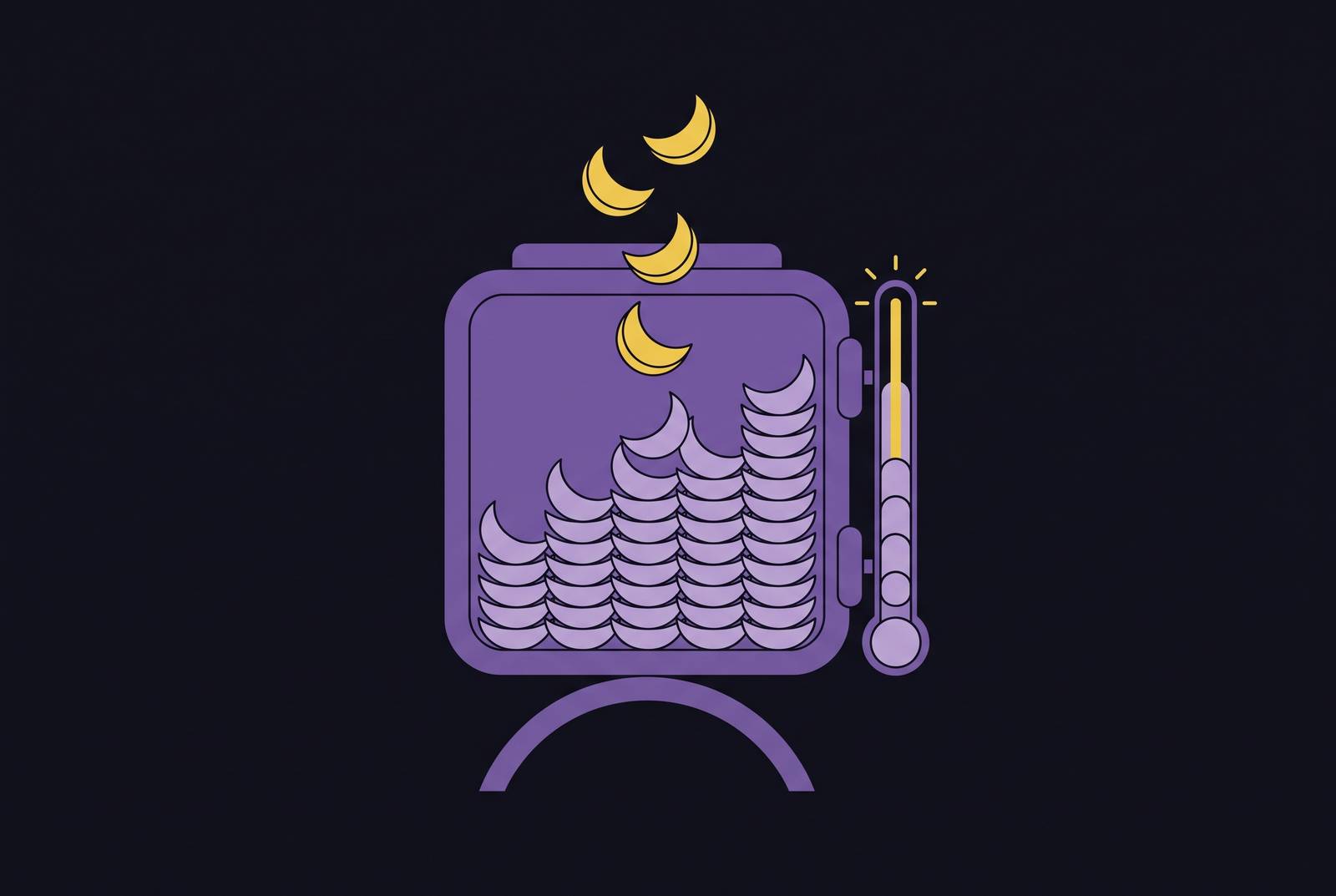
Sleep banking means getting extra sleep before a period when sleep will be cut short. The evidence supports a plain conclusion. It can soften some of the effects of later sleep loss, but it cannot replace the sleep that will be missed. The research should therefore be assessed by how much protection it shows.
Better attention during sleep loss is a real benefit, but it is not the same as normal performance or protection from every health consequence. The studies described here support a buffer for some aspects of performance and, in one study, faster recovery afterward. They do not establish an allowance of sleep that a person can safely skip.
WHAT IS ACTUALLY HAPPENING AND WHY (Mechanisms & Causes)
Sleep before a restriction period can affect how someone performs during it. Sleep banking changes how much sleep someone gets before that period by giving them more time to sleep. Timing is central to the idea here. Extra sleep after sleep loss is recovery, while extra sleep before it is the preparation being tested. Both concern sleep loss, but they answer different questions about whether its effects can be reduced before they begin or repaired once they have appeared.
Comparing sleep to money in a bank makes this easy to grasp, but it can also mislead. A bank balance has a fixed value that can be withdrawn, but sleep research has not shown how much missed sleep later can be offset by extra sleep now. Instead, the studies compare groups or sleep conditions and measure how people respond to later restriction.
Rupp et al. (2009) tested this preparation by assigning people at random to extended or habitual sleep for one week before cutting their sleep. The extended group had 10 hours of time in bed each night, while the habitual group followed its usual sleep schedule. Both groups then faced seven nights with only three hours of time in bed. The extended group did better during restriction and recovered faster afterward. Because both groups then faced the same restriction, their results suggest that the earlier chance to sleep more helped.
The phrase “time in bed” needs careful reading. It tells how much time people were given to sleep, but does not show that they slept for every minute of it. Ten hours in bed should not silently become ten hours of actual sleep when the study is described. The study gave people more time to sleep before restriction, but did not measure an exact amount of sleep that everyone can add to an account.
The time spent preparing matters too, because the study did not test one unusually long night just before sleep loss. It tested a week with more time to sleep before a week of severe restriction. That is a specific experimental setup. It supports the idea that deliberate preparation can help, but it does not establish that any amount of extra sleep, obtained at any point beforehand, will produce the same result. Nor does it make the restriction schedule a model to follow outside the study.
Arnal et al. (2015) adds evidence about attention by showing that six nights of extended sleep improved performance on a psychomotor vigilance task and reduced sleep pressure. Participants had fewer lapses and faster responses on the task. The finding helps identify what sleep extension can improve, namely sustained attention and the pressure to sleep. It does not, by itself, show that every kind of thinking or physical performance improves to the same degree.
Those measures make the evidence easier to interpret because “cognitive performance” can otherwise sound broader than it is. A vigilance task tests how well someone can keep paying attention and respond, so fewer lapses and faster responses show that they did better on that test. They are not a complete assessment of judgment. Memory, complex decisions and other abilities would need evidence of their own before the same benefit could be claimed for them.
The comparison group also changes what “better” means. In the Rupp study, the extended group did better than the habitual-sleep group during the later restriction period. That is a relative advantage under sleep loss. It does not mean the extended group escaped impairment or performed as though the restriction had never happened. A buffer can reduce the size of a decline without preventing the decline, and the practical interpretation depends on keeping those two claims separate.
The Rupp study found faster recovery in the extended group, which suggests that how much sleep people were allowed beforehand also mattered after restriction ended. Still, faster recovery takes time, and this finding does not show that people can do without recovery sleep.
The evidence supplied does not establish a reliable number of days during which someone can expect the buffer to hold before impairment catches up. A fixed window would sound reassuringly precise. It would also suggest that the effects turn on at a known point, when the findings instead concern differences in performance under particular study conditions. A known restriction period makes advance preparation possible, but it does not make the resulting protection predictable to the day.
Extra sleep beforehand may help the brain keep the resources it needs for alertness and cognitive function when sleep deprivation begins. The notes also describe sleep deprivation as reducing activity in the insula, impairing memory capacity and affecting the expression of brain-derived neurotrophic factor, or BDNF. Those effects help put the changes in performance in the context of what happens in the brain, but they do not prove exactly how sleep banking helps.
BDNF is relevant because a deficiency is linked in the supplied material to decreased activity in the prefrontal cortex and hippocampus. That is a more specific claim than saying sleep loss simply makes the brain work worse. Specificity alone does not complete the causal chain. The evidence described here does not show that sleep banking builds a measurable BDNF reserve or prevents every change associated with sleep deprivation. It is possible to accept the observed performance benefit while remaining cautious about the mechanism behind it.
That separation between result and explanation is important to the broader debate about whether sleep can be “banked.” The practical claim is narrower than the metaphor. Researchers can observe better performance after sleep extension without proving that sleep is stored as a substance or that all the relevant biological pathways are understood. At the same time, an explanation that seems likely cannot prove benefits that the study did not measure.
The same restraint applies to health claims because these findings chiefly support changes in attention, performance, sleep pressure and recovery. Those outcomes leave a gap in the evidence for protection from long-term illness. Calling the effect “resilience” or “protection” does not fill it, so those terms need to stay tied to the outcomes actually described.
The research outlined here changes sleep opportunity before restriction, rather than establishing that extra sleep corrects a disrupted sleep-wake rhythm. The findings cannot simply cross that gap. Any claim about protection from circadian disruption would need support directed at that problem, rather than being inferred from better attention after extended sleep. This is why a performance buffer should not be presented as a general fix for all the consequences associated with difficult sleep schedules.
Deliberate sleep extension across several nights is the preparation being studied. At the same time, a study protocol is not a universal prescription, and the material here does not establish one ideal amount of extension for every reader. It supports the approach more clearly than it supports a personalized schedule.
Nor should evidence about sleep extension be used to sell a supplement as a way to bank sleep. Lopresti et al. (2021) found that Bacopa monnieri supplementation improved sleep patterns at most as much as placebo, a result that does not support a sleep-banking claim. More fundamentally, taking a supplement and obtaining extra sleep are different interventions, so evidence for one cannot be borrowed to support the other. A claim that a product improves sleep would also need to be distinguished from a claim that it improves performance during later restriction.
The remaining uncertainty is not a reason to flatten the answer into either enthusiasm or dismissal. The Rupp and Arnal studies offer specific grounds for taking advance sleep extension seriously, while leaving important questions about its scope unanswered. Both parts belong in the same assessment. A useful strategy can have a narrow job.
The clearest boundary is the decision the evidence cannot authorize. Nothing described here establishes that someone should choose a longer restriction period because extra sleep came first, or that better test performance certifies safety during sleep loss. Sleep banking can improve the starting conditions for an unavoidable period of reduced sleep. It does not turn that period into a harmless one.
Sources
- The Role of Sleep Banking in Reducing Cognitive and Motor Impairments from Subsequent Sleep Restriction: A Narrative Review
- Knowledge structure and emerging trends of cognitive impairment induced by sleep deprivation: A bibliometric analysis based on CiteSpace and VOSviewer from 2000 to 2022
- Benefits of Sleep Extension on Sustained Attention and Sleep Pressure Before and During Total Sleep Deprivation and Recovery - PMC
- (PDF) Sleep Extension before Sleep Loss: Effects on Performance and Neuromuscular Function
- The Role of Sleep Banking in Reducing Cognitive and Motor Impairments from Subsequent Sleep Restriction: A Narrative Review